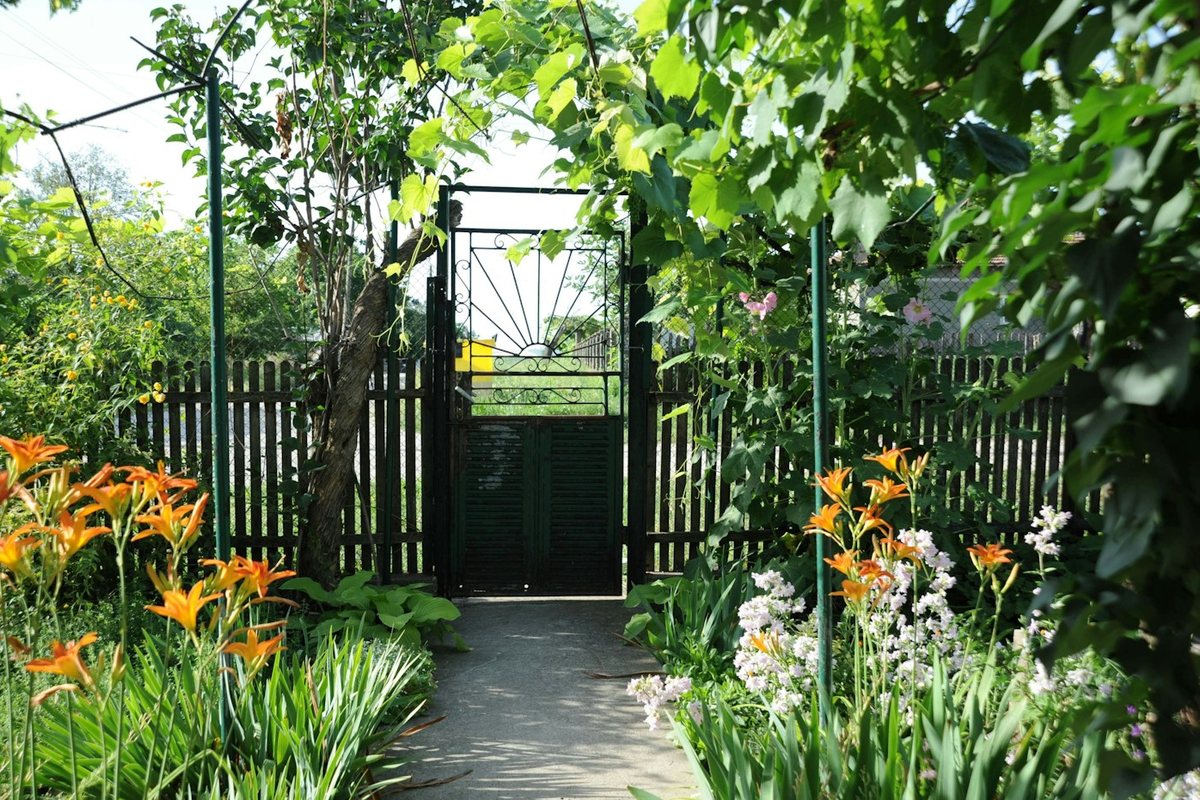
The rose came over the fence in June and scratched Owen across the forehead in July. By August, he had decided that Mrs. Bell was either unaware of the property line or conducting a slow invasion. He clipped the offending branches and dropped them, neatly, on her side.
The following afternoon they reappeared beside his bin. No note. No accusation. Just thorns, arranged with the same care he had used. He admired the precision even while being annoyed by it.
His wife suggested that he knock on the door. Owen said there shouldn't need to be a conversation about where a fence was. His wife looked at him for a moment and went back to her book.
They had moved in the previous winter. Mrs. Bell had introduced herself, offered a spare snow shovel, and asked whether they liked gardening. Owen had said yes, meaning he liked sitting outdoors. Mrs. Bell had apparently interpreted the answer more broadly. She often supplied advice across the fence, most of it accurate and none of it requested.
On Saturday he found her sitting on her back step with a pair of secateurs in her lap. She was wearing a wrist brace.
“I've been meaning to cut that rose,” she said before he could speak. “The ladder isn't a good idea just now.”
Owen looked at the brace. “I could have done it.”
“You did.”
There was no escaping the deserved pause that followed. He apologized for dropping the branches over. She apologized for putting them back by his bin. Neither apology was especially graceful, which made them easier to believe.
He offered to trim the rest. She agreed, provided he waited until she could show him where. For forty minutes she explained the difference between dead wood and a stem that merely looked unpromising. Owen held the ladder and learned that he had cut precisely the wrong branches in August.
When the work was done, they drank tea on her step. She told him that her husband had planted the rose. Owen braced for the guilt he thought this information would require. But she only said that he had chosen a variety much too enthusiastic for the space.
“He was like that with everything,” she added. “Bought a piano for a room that barely held a chair.”
Owen laughed. The late afternoon passed more easily after that.
He had been praying, lately, to be useful. He had in mind the community building project his church was planning. It involved drawings, committees, and the satisfying prospect of visible progress. He hadn't considered that usefulness might begin ten feet from his own back door, with someone whose advice irritated him.
He still didn't want unsolicited gardening instructions every Saturday. When the conversations grew lengthy, he learned to say that he had to get back to what he was doing. Mrs. Bell learned to ask before offering cuttings. A decent boundary improved their friendship more than pretending there wasn't a fence.
The next summer, she asked whether a single branch could stay on his side. It had three buds, tightly folded and pale at the edges. Owen said yes, if she could keep it above head height. She nodded solemnly, as though they had negotiated an international agreement.
When the first flower opened, his wife put a chair beneath it. Owen sat there after supper. On the other side of the fence, Mrs. Bell was watering. He asked her the name of the rose, then listened while she told him.