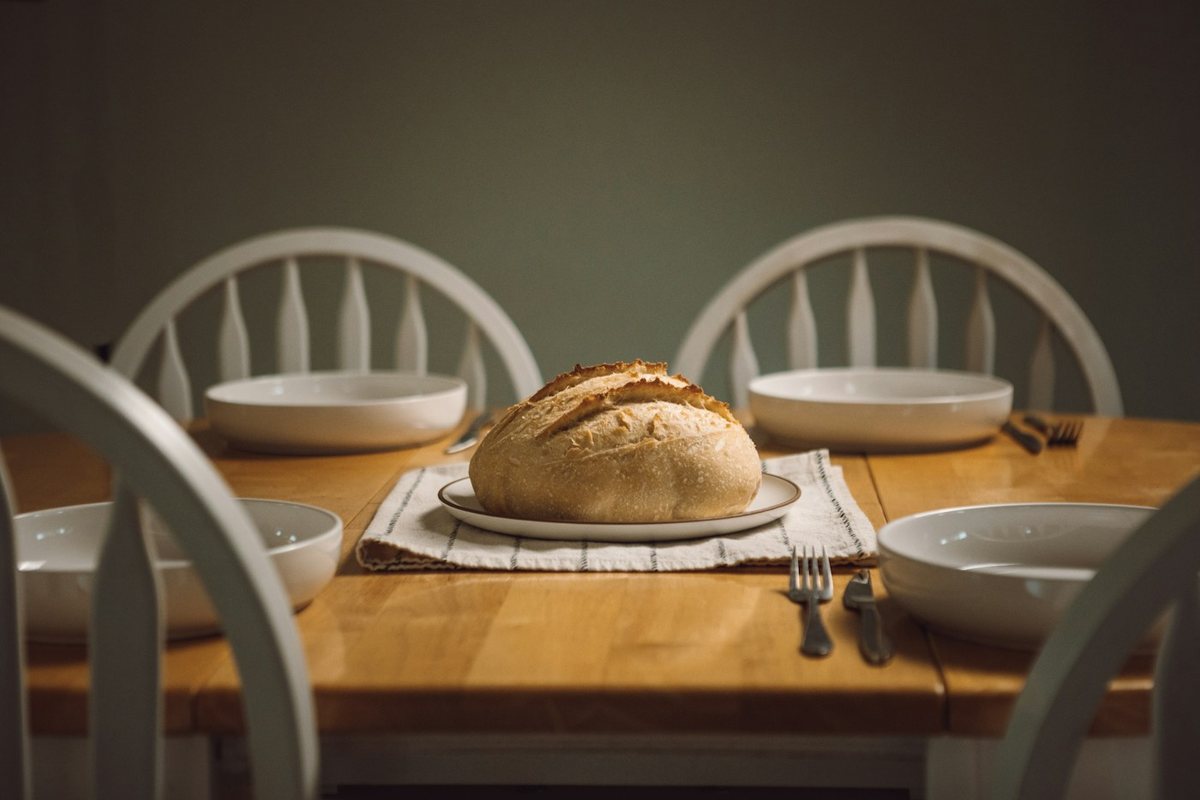
The fourth chair had become a place for the mail. Ruth hadn't decided that it would. One envelope arrived, then a seed catalog, then the church bulletin she meant to read. By November, anyone wanting to sit there would have needed to ask the electric company to move.
Her husband had been gone for eighteen months. She still cooked potatoes for two, though she had stopped pretending the leftovers were intentional. Most evenings she ate at the kitchen counter with the radio on. The dining table was for birthdays, if her daughter could get away from work, and for sorting things that did not seem to belong anywhere else.
On Thursday, the doorbell rang while she was draining a saucepan. Outside stood the young man from the apartment upstairs. She knew his name was Daniel because his packages occasionally arrived at her door. He held an unopened jar of sauce.
“This is embarrassing,” he said. “Do you have something that opens these?”
She took the jar, wrapped a dish towel around the lid, and turned. Nothing. He looked relieved. Together they tried a rubber glove, hot water, and the handle of a wooden spoon. When the lid finally gave, they both laughed with an enthusiasm the accomplishment probably didn't deserve.
He thanked her and stepped back toward the stairs. She could have shut the door. Later, that was the part she remembered most clearly: how easy it would have been to end the evening there.
“I've made too many potatoes,” she said.
Daniel glanced at the jar. “I've made none.”
They carried the mail to the sideboard. Ruth found a second plate, then changed her mind and brought out the good blue ones. Daniel asked whether he should say grace. His grandmother always did, he explained, but he hadn't been to church in a while and wasn't sure he remembered the right words.
“There aren't special words for potatoes,” Ruth said. She thanked God for the food and for company. Her voice caught on the last word. Daniel kept his eyes on his plate until she was ready.
The conversation was ordinary. His car needed a battery. Her rosebush had black spot. He worked evenings at a distribution center and was taking an accounting class online. When she mentioned her husband, he didn't hurry to tell her how time healed things. He asked what kind of person he had been.
Ruth told him about the terrible shelves he built and the excellent pancakes he made. By the time she reached the story about their honeymoon tent, the potatoes were cold. Neither of them moved to warm them.
Nothing dramatic followed. Daniel did not become a substitute son. There were weeks when they barely crossed paths. Once he forgot an invitation, and Ruth felt foolish for having bought a pie. When he apologized, she believed him. They were two people learning how to make room, not characters who suddenly knew how to do it perfectly.
By spring, Thursday supper had become something they tried to keep. Sometimes a friend came with him. Sometimes Ruth's daughter called during dessert and was passed around on speakerphone. The fourth chair acquired a loose screw, which Daniel tightened badly and then tightened again.
Ruth had heard the passage about welcoming strangers many times. She used to picture someone knocking in a storm, a person whose need would be obvious. She had not imagined a neighbor with a jar of inexpensive tomato sauce. She had not imagined that she would be the one receiving something.
One evening she caught herself laying out four plates when only two people were expected. She left them there. The mail could stay on the sideboard, and whoever arrived would have somewhere to sit.