Martin had calculated that leaving at eight twelve would get him to work by eight forty. The calculation depended on traffic behaving like a grateful participant in his plans. On Wednesday, a freight train disagreed.
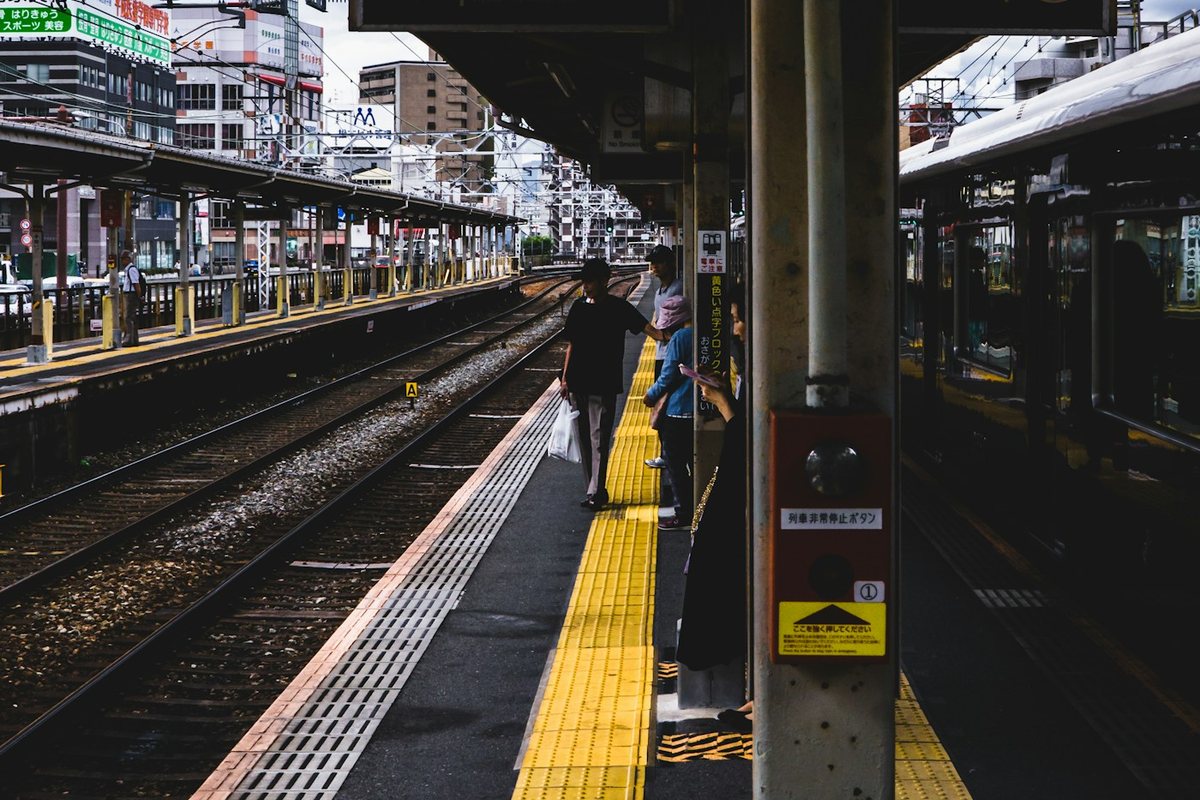
He sat behind the lowered barrier with his hands arranged firmly at ten and two. The meeting began in eighteen minutes. Beside the tracks, a crossing guard in a fluorescent coat stood with three children and a father holding a scooter. Nobody looked as aggrieved as Martin felt they should.
One of the children dropped a mitten. The guard picked it up, shook off the grit, and waited while its owner examined it for damage. Martin watched the freight cars: oil, timber, containers with names he couldn't pronounce. The line seemed endless.
His phone lit up on the passenger seat. He left it there. It was the one useful habit he had kept from the safety course his employer made everyone take. With nothing to look at but the train, he noticed the guard speaking to each child separately. A question about a spelling test. A compliment on a new backpack. A solemn inspection of a gap where a tooth had been.
Martin knew the guard's face. He had driven past her for three years. Until that morning, he had never considered whether she had a name.
When the barrier rose, a child waved at him as though they had endured the delay together. He lifted two fingers from the steering wheel. He reached the office at eight forty-three. The meeting started at eight fifty-one because someone couldn't connect a laptop to the screen.
That evening, his daughter asked whether he could listen to her practice a poem. He said yes while opening his email. She began, stopped, and began again. Halfway through the second attempt, he thought of the guard crouching to inspect a missing tooth as though there were nowhere else she needed to be.
He shut the laptop. “Start over. I wasn't properly listening.”
His daughter gave him a look that suggested this was not breaking news. Then she stood straighter and started again.
The next week, he walked her to school. They met the crossing guard at the corner. Her name was Denise. His daughter already knew this, along with the name of Denise's dog and the fact that her favorite biscuits were ginger ones. Martin had been passing a whole person twice a day and seeing only a moving road sign.
He did not become patient overnight. On Friday he muttered at a delivery van and then felt ridiculous. The point wasn't that irritation had disappeared. It was that he had begun to notice how often he treated other people's minutes as obstacles to his own.
At Sunday worship, during the quiet before the first hymn, he thought about the command to love a neighbor. He usually imagined that love would require some large, identifiable act. Denise's work suggested a smaller unit of measurement: the length of a child's answer, the time needed to cross safely, three minutes beside a passing train.
On Monday he left home a little earlier. At the crossing, his daughter stopped to tell Denise the entire poem. Martin stood beside her with her lunch bag. Twice he wanted to check the time. Both times he waited. When she finished, Denise applauded with her gloves on, a soft, padded sound that somehow filled the street.