When the movers asked whether the desk was empty, Simon said yes. He had checked the obvious drawers. The narrow one beneath the writing surface had been stuck for years, and he had come to regard it as part of the furniture rather than a place that opened.
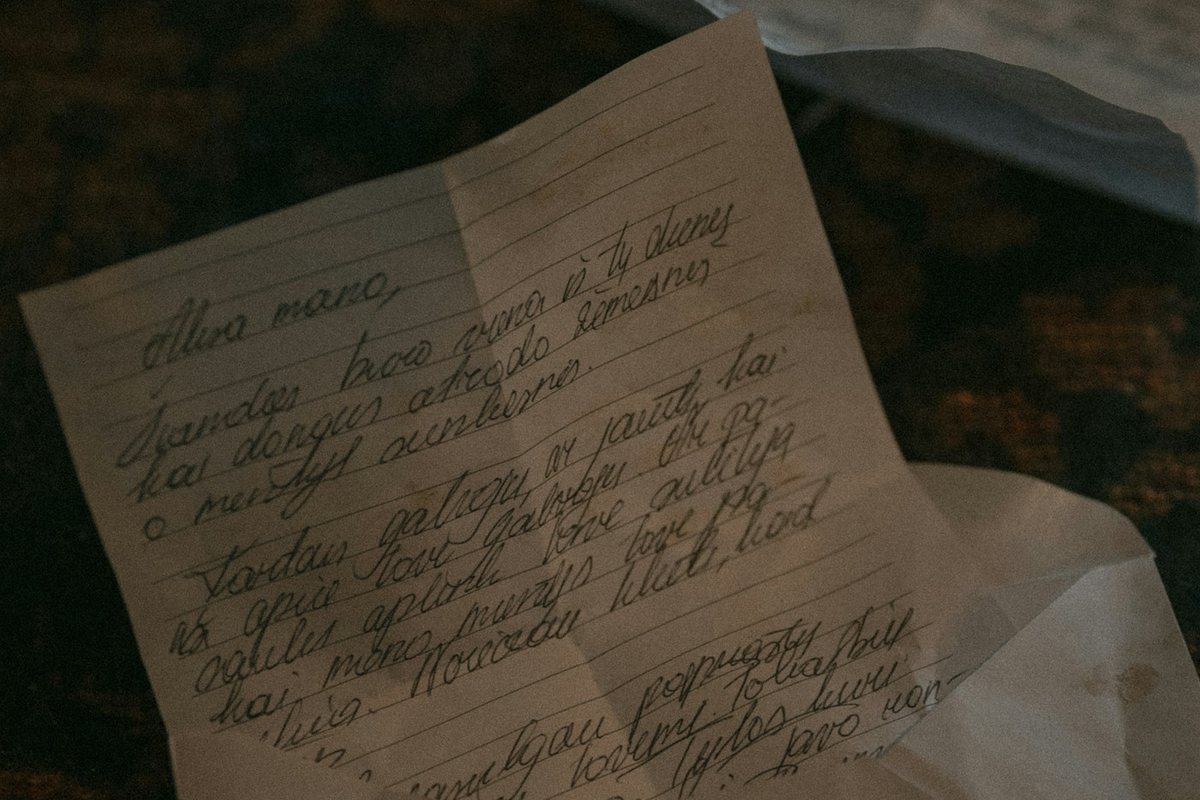
The desk tilted on its side. The drawer slid free. A pencil, two stamps, and an envelope fell onto the carpet. On the envelope was his brother's name in his own handwriting. Simon put it in his jacket before anyone could ask.
He had written the letter after their father's funeral. There had been an argument about the house, although the house was only the address where older grievances had gathered. Simon had accused Andrew of disappearing when things became difficult. Andrew had said Simon liked being the responsible one because it gave him someone to blame. Both statements contained enough truth to do damage.
The letter apologized for one sentence Simon could still remember saying. It also contained three paragraphs explaining why he had said it. Reading it in the empty kitchen, he could see that he had spent more effort defending himself than acknowledging what he had done.
He almost threw it away. Then he found a pen and crossed out the explanations. What remained looked painfully small. He rewrote it on a fresh sheet from the printer: I spoke cruelly about your relationship with Dad. I didn't know everything you were carrying. I'm sorry. I'd like to talk, if you want to.
He posted it before changing his mind. Then he moved house and spent two weeks discovering how many boxes could be labeled kitchen without containing the kettle.
Andrew called on a Tuesday. Simon was standing on a chair, trying to hang a curtain.
“I got your letter.”
“Right.”
“Why now?”
Simon looked at the curtain rod in his hand. “Because I found the old one and realized I'd never actually apologized.”
The silence was long enough that he checked the screen. Andrew was still there.
“You really hurt me,” his brother said.
“I know.” Simon stopped himself. “I know some of it. You can tell me the rest.”
They spoke for twenty minutes. It was not a reunion that could be described with swelling music. Andrew was guarded. Simon became defensive once, heard it, and tried again. They agreed to meet for coffee the next month because both calendars were full and neither wanted to pretend they weren't.
Before the call ended, Andrew asked whether Simon had kept their father's old radio. He had. Andrew said he was glad. It was the first thing they had agreed about without effort in a long time.
On Sunday, Simon heard a prayer about reconciliation. He no longer pictured it as the pleasant moment after an apology was accepted. He pictured the difficult middle: letting someone describe a wound without hurrying them toward forgiveness, accepting that an invitation could be refused, leaving the next conversation possible.
When they finally met, Andrew arrived ten minutes late. Simon noticed the familiar irritation and ordered another coffee instead of composing a remark. His brother sat down, glanced at the menu, and asked about the move.
“The desk made it,” Simon said.
“That old thing?”
“It's got a drawer I didn't know still worked.”
Andrew smiled. It was not the end of their trouble. It was a place to begin talking.